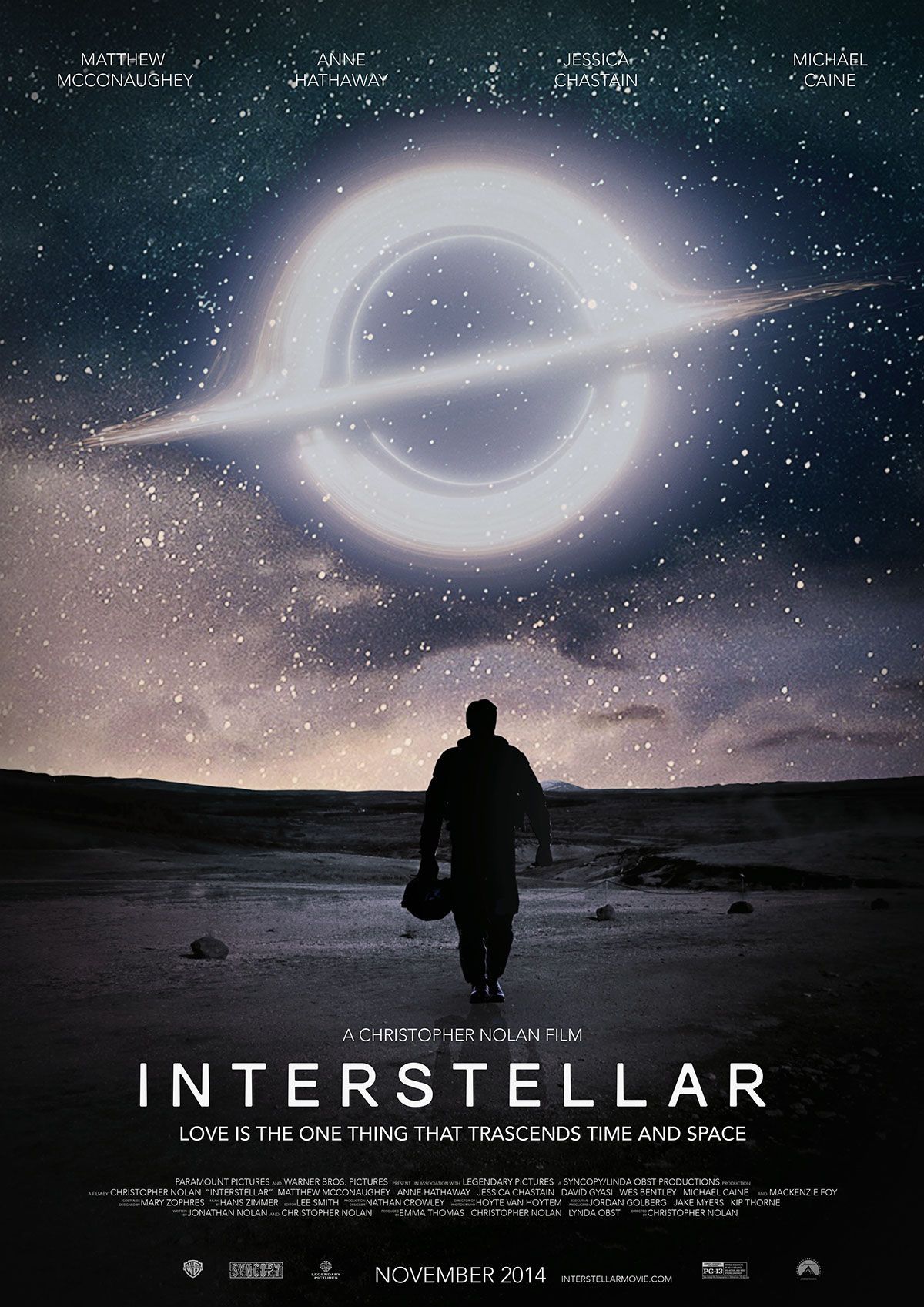
In the near future,
Humanity faces extinction due to dust storms and widespread crop blights. Joseph Cooper, a widowed former NASA test pilot, works as a farmer and raises his children, Murph and Tom, alongside his father-in-law Donald. Cooper is reprimanded by Murph’s teachers for telling her that the Apollo missions were not fabricated. During a dust storm, the two discover that dust patterns in Murph’s room, which she had first attributed to a ghost, result from a gravitational anomaly.
Cooper leaves his family – daughter Murph (Mackenzie Foy/Jessica Chastain), son Tom (Timothee Chalamet/Casey Affleck) and father in-law Donald (John Lithgow) – on Earth in order to lead the NASA mission. In his absence, his family develops a contentious relationship; but we don’t learn about it until Cooper does, 23 years into the future while watching old transmissions.
Interstellar’s primary theme has to do with logic versus emotion. The dynamic permeates almost every part of the film. For example, the school system has turned away from teaching kids to dream and instead grounded itself to what is the most practical and necessary. Most of the pivot points in the plot come down to characters acting out of logic, fear, or love.
While Nolan does celebrate science and engineering, he doesn’t shy away from aggrandizing and lionizing the need for the emotional component. This is most obvious in his repeated references to Dylan Thomas’s legendary poem “Do not go gentle into that good night”, with special emphasis on the final line, “Rage, rage against the dying of the light.” That ties-in to the idea of the survival instinct that can motivate someone to act beyond what logic is otherwise telling them